And welcome to my little blog! This is my very first blog and I hope to post a variety of really interesting information that you all will enjoy! Please let me know if there are any subjects you would like to read more about or if there is anything you read about that you would like to share!
So far this year I have tried to keep on top of my studies as well as enjoying being part of a society during my final year. Though this has been difficult, and I have struggled at times, I believe I have tried my best to manage my time wisely and learn as much as I could have.
I have attended many talks and lectures this year, and I have learned many new things, particularly about birds. During field work this year I learnt how to use a scope to spot and count birds over great distances. I hope that this is a skill that I can use in the future and I hope that having this skill can help me to find a career. I also learnt about reserve management, specialising in bird management and although I did not always understand the finer details, I understood that there are difficulties in managing a large area with species that have different needs.
I also learnt much about ecosystems, particularly those containing or surrounding lakes or bodies of fresh water. I learnt how small changes can have a dramatic effect further along the chain and how sometimes they have no effect at all. I also got to travel to a beautiful part of the country to observe the Llan Idwal lake in Snowdonia National Park.
Through attending seminars and other talks, I have discovered much more about the fields in which I wish to work in the future. Whether this be with the BTO, the BIAZA, or even somewhere else. I have also been able to learn more about other species aside from birds and sometimes how birds interact with those species.
This semester I have been learning about the planet. The damages it has been dealt and how we, as humans, are causing much of this. I have also been able to recognise how animals are adapting to these anthropogenic changes and how perhaps amongst the dark there are is still some form of silver lining; a glimmer of hope for the future.
My next steps are to apply to numerous research or intern projects that I believe could help me make a start in a career in Ornithology. I have already looked into internships with the BIAZA as well as internship programmes with various zoos nearer my home location to occupy the summer. I will also be looking to pursue a master’s degree in Manchester University with the hopes to spend some time volunteering or interning with Chester zoo, to gain more experience handling animals and of animal husbandry.
As I finish my final year here, I hope that in my future I will be able to work in bird conservation, be it in-situ or ex-situ, and that I can help to make a difference in the world, even if it is only making a small difference!
The Little Tern, scientific name Sternula albifrons, is a small migratory bird that nests on shingle beaches around the UK during the summer months. There are a number of summering colonies around the British coastline. They eat fish or crustacean by plunge-diving just off-shore. This is the bird I chose to write my dissertation on, focusing specifically on a colony in Prestatyn, North Wales. I decided on this project due to a recent interest in birds after the field trip to Southern Spain. After learning more about the birds I’d seen I decided I wanted to specialise in that area of study, which led me to choosing a bird related project.
My project is to determine, using data and literature analysis, whether the colony is a source or a sink colony. To do this, I first had to collect the data. The data was taken by placing GoPros near nests that contained eggs. The cameras were placed and retrieved by the wardens during their daily nest counts to reduce stress to the birds. The birds flew away when the Wardens entered the pens but flew back to the correct nests shortly after the wardens left the pens. They had no adverse reactions to the cameras.
The cameras were set to take a photo every 2 seconds. After this footage was copied to my own computer, I along with some of the volunteers, sifted through the photos trying to identify the ring number or colour on each individual bird’s leg. We made a note of many factors, such as; were both birds definitely seen; were any tags metal or coloured; if they were coloured what colour and what was the number on the tag, etc. These were all collated onto a google document that was available for anyone who observed footage to input or for those who were curious.
By using this data, alongside the yearly reports, I will be able to create a demographic model showing whether the colony is supporting itself and if it will continue to do so based on the trends of the past and the present.
An adult Little Tern, Sternula albifrons, and chick
In my second year of University, I was lucky enough to take part in a field trip to the South of Spain for 1 week to visit many reserves and areas of conservation interest. Originally, I chose this trip because it was the cheapest of the field trips and it seemed like it would be a nice experience. However, looking back I am extremely glad that this was the trip I chose as, not only did I make some amazing friends, I was also inspired by what we saw there.
We began our journey by travelling from Málaga to El Rocío on the south west coast, where we stayed next to Doñana National Park. On the 2nd day we travelled to two nature reserves that specialised in water-bird conservation and thus began my newfound fascination. During the trip we carried with us field notebooks to draw and note any animals we came across. I thoroughly enjoyed trying to determine what species of bird we were seeing and after a few days being able to recognise the common birds from a distance gave an enlightened feeling.
On the 3rd day we had a safari through some areas of Doñana National Park where we were hoping to spot a Lynx. Unfortunately, we did not spot any. However, we saw many raptors including many red kites and some Griffon Vultures, identified by our guides with scopes as they were too far away for us to identify with binoculars alone.
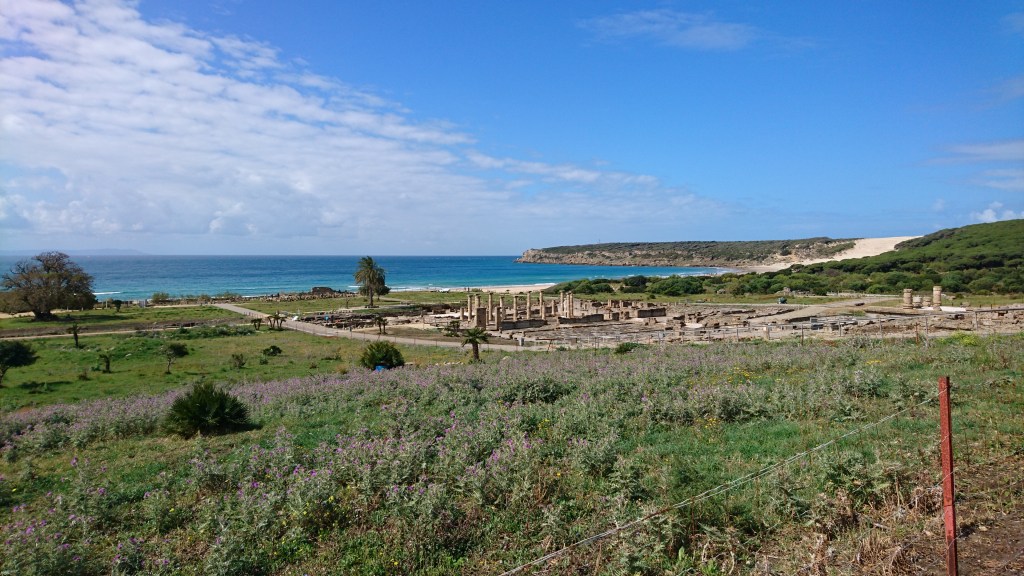
On the 4th day, we travelled further south, to Cádiz and Tarifa and explored the towns before travelling to Huerta Grande, our second stay. In the evenings we explored the area looking for amphibians or lizards, and during the days we travelled to more parks and reserves. On day 5, we travelled to Baelo Claudia, the ruins of an ancient Roman town, and amongst the forest to the side we looked for the Mediterranean Chameleon, Chamaeleo chamaeleon, and we found one!
On the 6th day we visited Gibraltar. We saw many Barbary Macaques but were bewildered as to how the locals chose to treat them in relation to tourism. Local guides would tempt an individual onto the head or shoulders of a tourist and would threaten to beat the macaque once the photo had been taken. Though this was reported to the staff, it seemed to be a common occurrence.
This trip was an eye-opening experience for me and one I’m so grateful to have been able to take part in. It has inspired me to try and pursue a career in Ornithology and I hope one day that dream will become reality!
Mediterranean Chameleon, Chamaeleo chamaeleo, found in the forest next to the Baelo Claudia ruins
The missions for modern zoos follow 4 aspirations: Education, Conservation, Research, and Entertainment. They must educate both children and adults alike about the animals they care for; this could be anything about them or where they live in the wild and about what they do for them in in-situ or ex-situ conservation. All zoo’s follow ex-situ conservation so this is a given, however, many are also partners of in-situ conservation parks. One such is Colchester zoo, located in Essex. They have a partnership with UmPhafa Nature Reserve, located in South Africa where they help raise funds to continue the in-situ conservation of many of the species they care for within the zoo.
There are 3 levels of organisation that focus on conservation; the British and Irish Association of Zoos and Aquariums (BIAZA), the European Association of Zoos and Aquariums (EAZA) located in the Netherlands, and the World Association of Zoos and Aquarium (WAZA) located in Barcelona. Zoos and in-situ conservation parks work in a global alliance with national federations dedicated to help the care and conservation of organisms and their habitats around the globe.
In ex-situ conservation, there are many issues with keeping animals in captivity. There are 3 top problem animals: Polar Bears, Cetaceans (Whales and Dolphins), and Elephants. They are the most likely animals in zoos to show stereotypical repetitive behaviour. Professor Georgia Mason, a behavioural biologist, has determined that she is able to provide 3 characteristics to look for when planning to avoid problematic captive husbandry. Zoo husbandry is not a ‘one size fits all’ approach and each species needs and wants must be treated individually.
The first characteristic is how bold or shy the species is. A shy animal will not do well to being in captivity. A population of Humboldt penguins, Spheniscus humboldti, were observed by a group of green tourists and their heart rates were measured; the rates increased dramatically during the time they were observed.
The second characteristic is the species territory size. Animals that have defined, small territories will cope well in an enclosure, however, those with a large home range will often not. This is when animals begin to continuously pace and show unnatural repetitive behaviour. Meerkats, Suricata suricatta, are a good example of this; they have high fecundity and have a small fixed territory so do not migrate or move great distances.
The third characteristic is plasticity of behaviour. Generalists are much more likely to adapt to being enclosed and under observation then animals with specific habitats or behaviours. An example of a specialist that does not do well is the Harlequin duck, Histrionicus histrionicus, who are not behaviourally plastic. Their requirements need to be exact or they will not be able to survive in a new environment.
All this research shows that not all animals belong in captivity This makes in-situ conservation more important for them and shows that we must focus on both in- and ex-situ conservation globally.
Genes co-operate to create a range of cells and systems, as well as helping animals to co-operate in hives or packs. But sometimes genes cheat the system. An example of one of these genes is paternal sex drive in Nasonia, a genus of parasitic wasps. Males have a single copy of chromosomes and females have two, meaning unfertilised eggs become males. The paternal SR (sex ratio) gene is an extra chromosome that is ‘floating’ around and is known as a selfish gene. When males and females mate, it destroys all the male chromosomes leaving only itself. The egg then become male as it only has the 1 set of chromosomes but does have the additional SR chromosome to pass onto the next generation. It destroys the fitness of all genes in the males except itself.
Diploid organisms have 2 copies of chromosomes that separate during gamete production. This means only one chromosome from each homologous pair will get into the gamete. If one of the pairs can destroy the other pair, then only that chromosome will be passed on. This essentially doubles the fitness of the chromosome. Sometimes the dominant, or driving, chromosome will destroy the sperm that do not have the dominant chromosome in them. In gamete killing drive it I usually the male chromosomes that kill other chromosomes.
In some populations of fruit flies, specifically Drosophila simulans, there is an x chromosome meiotic drive in the males. The x chromosome destroys the y chromosomes in gametes meaning any females that mate with males that have the drive will produce only females. This causes an in-balanced sex ratio of males to females. The drive was discovered in 2001 in a small island off of Madagascar, by 2016 it had reached Morocco and was found all over Africa. There was a 2nd wave of repressor genes that emerged which could counteract the ratio in-balance and reset the ratio. This event showed that drivers can spread rapidly over large distances and cause rapid evolution.
An experiment was performed using Drosophila pseudoobscura to determine if females selected males without the gene. It was determined they could not, and the males lose around half of the sperm cells. This means in competition with males that do not have the gene, they will lose out and parent very little offspring in the population. It was discovered populations that showed high polyandry showed a decline in the population percentage with the gene.
Sometimes there is not always a repressor gene that surfaces. In Drosophila subobscura in North Africa, the populations are monandrous, but the drive does not spread like in D. simulans. Currently we have no idea why. This shows that although we understand much more about how genes work than we did a hundred years ago, there is still so much more we can learn from studying them
There are many ways of exploiting wildlife: harvesting, poaching, culling, etc. All of these have negative connotations though some act as a way of legitimising the removal of individuals. Humans have been hunting and harvesting various species for most of humankind. We hunted dodos and carrier pigeons for food and ended up hunting them to extinction. Currently horseshoe crabs are being harvested for their blood which is used in bacterial analysis, this is dangerous for the crabs and in females has shown it can cause them to go to spawning grounds less.
But is this really so wrong? According to the ICUN says trade in plants and wild animals is okay so long as; the trade is sustainable; the trade results in a significant contribution to human needs and local/national economics; the trade helps to motivate commitments to conservation.
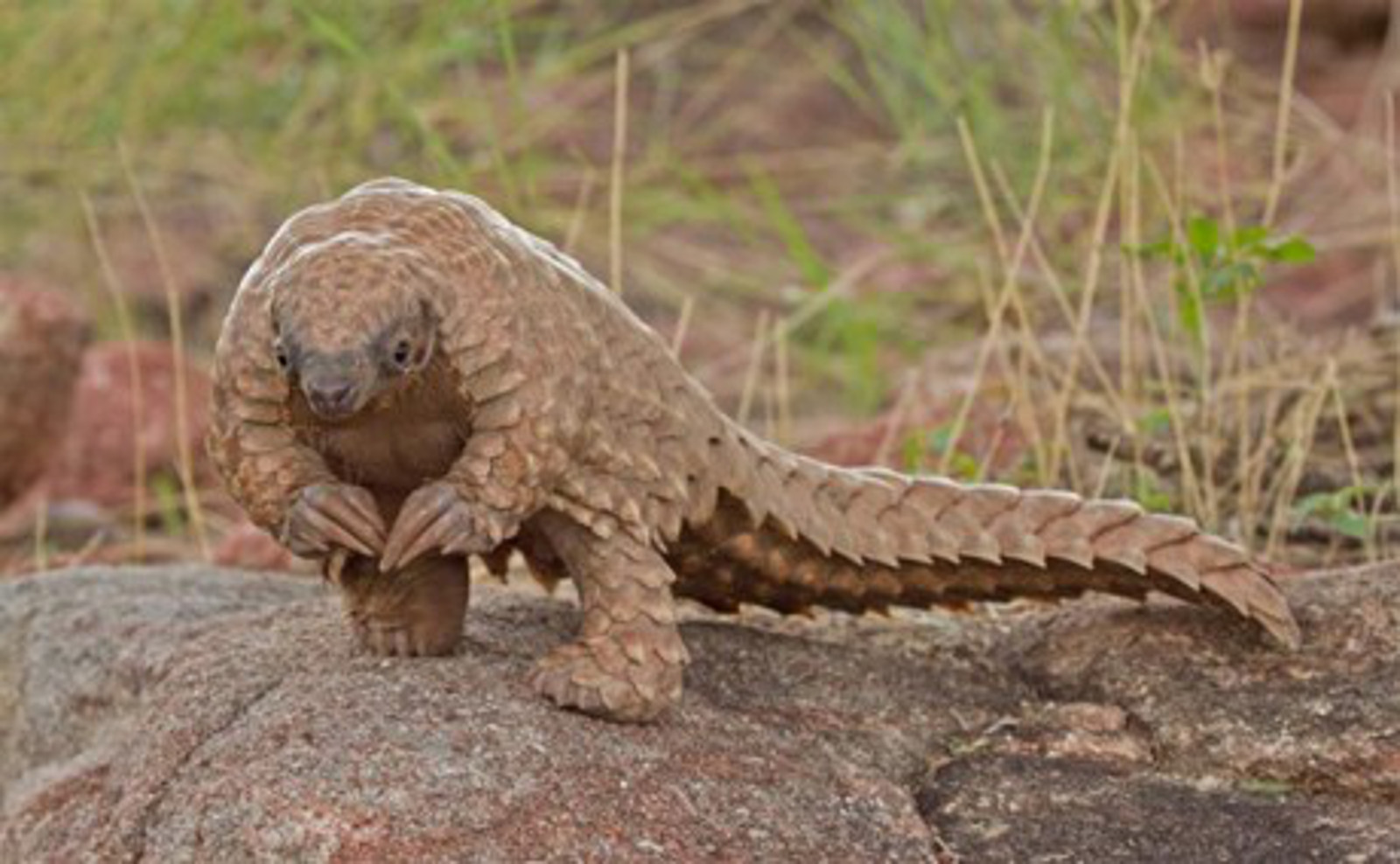
Many of the animals caught up in foreign trade are animals that we, as conservationists, know very little about. One of these is the Pangolin, of the family Manidae, whose populations and habitats are vastly unknown. Yet pangolin hunters find and kill them in batches of 100s at a time. The only information we can really take from is the market sales numbers as these will have current and past data as to how many have been removed from the populace, however, this is only so helpful as we do not know the initial starting population number.
However, this information is becoming much more difficult to get hold of as legislations get put into place. The legislations make trade illegal but rather then stop the trade it means the trade become undocumented and thus cannot be traced. This gives us no control over the volume of trade occurring.
After observing a small population of African Grey Parrots (Psittacus erithacus), models were made to determine the outcome of the population based on how many individuals were removed. It showed that when between 0-900 ±100 individuals were removed, the population remained stable and increased as expected. However, when 1200 ± 100 individuals were removed the population collapses within 20 years.
This shows that the volume of trade affects the outcome of the population. Likewise, the life stage individuals are removed at also affects the population outcome. Models were made to predict the effects of removing chicks, nesting adults, and indiscriminate trapping of individuals. When chicks were removed, the population remained stable and grew appropriately. When nests were raided, and adults were taken randomly the population collapsed quickly in both models.
Trade needs to be organised to become sustainable and in a way where it can be monitored easily.
The project is based in Ladock, a small village in Cornwall, and began in 2013. This area was chosen, in part, due to the periodic floods that occur there. Though the floods aren’t fatal, they cause a lot of damage and can be life-ruining. It was decided that something needed to be done to stop these floods. There was no funding, so unnatural flood barriers were not an option. However, beavers are a relatively cheap, natural flood protection. It was expected that the beaver’s release would be easy and simple however, this was not the case.
A license was needed from Natural England in order to release the Beavers and the conditions of the license was near impossible to achieve; if even one landowner disagreed the license could not be given. If the beavers were released into fenced off area it technically doesn’t count as an official release and so a license would not be needed. As they would be contained, they could also be observed and monitored better. What they did and how they did it could be observed.
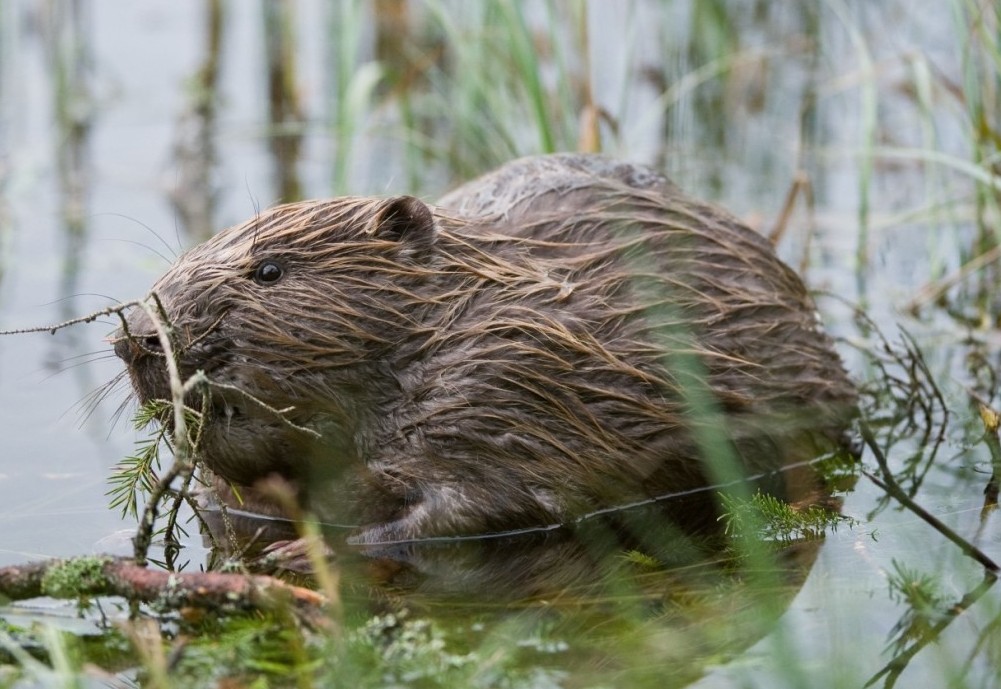
In 2013, Ladock flooded twice and in 2014, it almost flooded again. June 2014 came with confirmation of the site being a good release area for the beavers, and a year later in June 2015, Exeter University (a partner of the project) agreed to execute hydrology monitoring for the area. This meant they looked at water input and output from the area over time. In June 2017, the beavers, a 2-year old male and a 3-year old female, were released. Within 2 days they had begun to create Dams.
32 weeks in, they have built 4 dams and a lodge in which they sleep. The pond has tripled its original volume and there are also 2 new ponds. They are also creating many shallow water pools and converting some of the land into wetland. A stream channel leaving the pond has also been split into two. The Hydrology reports from Exeter University show that when a large amount of water enters the system, it leaves the system much slower than it did before the beavers were introduced; this reduces the flood risk.
There are short-term and long-term prospects for this project. Some short-term prospects are; the dam and lodge building will progress and continue to show good results; wildlife abundance and diversity will continue to increase. Already amphibian spawning numbers have increased and there are some new species entering the habitat.
The main long-term goal is to release the beavers with the hope that eventually they become part of the Cornish countryside and are just a natural part of the nature in Cornwall. This would involve adoption as a native species. Scotland has done this but due to certain laws England cannot so hopefully the beavers in Scotland manage to work their way into, and across, England.
If beavers become naturalised across the UK, stream ecological health may increase and flood events may decrease.
For more information on this ‘gateway re-introduction’ visit the Cornwall Wildlife Trust website.
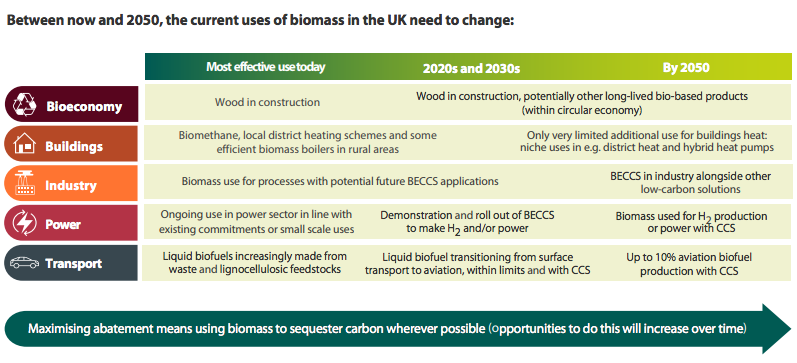
In the UK the timber availability is increasing but the materials can be difficult to secure for building materials due to increased demand. Timber can reduce carbon footprint via lower carbon embodiment during construction and increased carbon sequestration when the trees are growing. The use of biofuels is increasing, and timber is a renewable source. Trees can be replanted whereas coals cannot and take time to form. There is also a possible future demand for biopolymers, which is an increasing drain on the same resource.
As buildings become more energy efficient, energy and carbon association with construction materials becomes more prominent. There is also a need for other types of buildings, such as warehouses, supermarkets, offices, etc, to be observed and for the data to be recorded.
Embodied carbon is the CO2 burden associated with a process. For timber this can be traced fairly easily, by observing the forest activities (fertiliser to grow the trees and chainsaws to cut them down), transport of the trees, sawmilling activities and kilning.
This project involved CO2 comparisons between open panel timber framed construction, and traditional brick and block masonry. Floor plans, thermal conductivity and insulation properties where kept as similar as possible. There were 4 types of structure used: Timber Frame only (TF), Timber Frame and Timber Cladding (TFTC), Timber Frame and rain-cladding, and Masonry.
In a detached house, the timber frame and timber cladding sequestered the most carbon and embodied the least carbon during construction. The masonry embodied the most carbon during construction and sequestered the least carbon.
Next was terraced houses, which became more efficient with the greater number of houses added. This is due to there being less walls to build. To follow 1 and 2 floor flats were built and the data recorded. In both 1 and 2 floor flats, the timber constructions embodied less, and sequestered more, carbon. When Cross Laminated Timber (CLT) was used in construction in place of plain timber, embodied carbon remained at a similar level, but sequestered carbon was much greater, by at least 3x in both 1- and 2-floored flats.
In housing timber offers a reduction in embodied carbon and an increase in sequestration of carbon. But, CLT offers even greater reductions in embodied carbon when it replaces concrete frames in larger structures.
Doing conservation work can sometimes be pretty difficult especially when you’re trying to survey a species that manages to hide, when its need to be counted is greatest. This was the case for Matt Geary and his parrot project. The project was conducted in the Caribbean Island of Hispaniola, with focus specifically on areas within the Dominican Republic. They were looking for Amazon Parrots (of the genus Amazona) and Hispaniolan parakeets (Psittacara chloroptera). These birds are of similar colourings though are vastly different in sizes so are easily separated and can be surveyed well. The amazon parrots have a wide nesting range from coast to cloud forest, but the Dominican Republic has lost a lot of forest. However, the range of the Hispaniolan parakeet is widely unknown, though it has been known to be seen often.
During the initial surveying, more Amazon Parrots were spotted than were expected, and the number of Parakeets spotted was much lower than initially predicted. The numbers seemed to suggest that parakeets were disappearing from the island. Of the areas surveyed, they were found only in one and this was right on the border with Haiti, far from the areas of protected forest within the Dominican Republic where they were expected. The area they were found in the greatest numbers was the capital city, Santa Domingo, where it is estimated that there are between 1500 and 3000 individuals living. The original theory as to why this population existed was that they were pets which had been released, however, the pets would need to come from somewhere which wasn’t feasible. Now though there are breeding populations within the city.
Transects were decided upon within the city to survey. Due to the city being a mix of rich and poor income, some areas of the city were not 100% safe. Therefore, only transects that were contained within safe areas were chosen for the survey. 2 master’s students from Bangor went to the Dominican Republic to help out with the survey’s and are currently still there. They were making counts of individuals, flocks and trying to spot nest counts. It was found that more parakeets were likely to be found in areas with greater tree species diversity and large green areas, such as parks and gardens. Fruiting trees and the closeness to large green spaces also affected the abundance of individuals. However, very few nest sites were found.
After all this, Matt looked at the number of parrots across the globe and saw that the number of parrots increased in cities. Another interesting part of this data was the parrot species found the most in urban areas. This parrot was in fact, the Hispaniolan Parakeet!