Talk by Chris Jones in February 2018
The project is based in Ladock, a small village in Cornwall, and began in 2013. This area was chosen, in part, due to the periodic floods that occur there. Though the floods aren’t fatal, they cause a lot of damage and can be life-ruining. It was decided that something needed to be done to stop these floods. There was no funding, so unnatural flood barriers were not an option. However, beavers are a relatively cheap, natural flood protection. It was expected that the beaver’s release would be easy and simple however, this was not the case.
A license was needed from Natural England in order to release the Beavers and the conditions of the license was near impossible to achieve; if even one landowner disagreed the license could not be given. If the beavers were released into fenced off area it technically doesn’t count as an official release and so a license would not be needed. As they would be contained, they could also be observed and monitored better. What they did and how they did it could be observed.
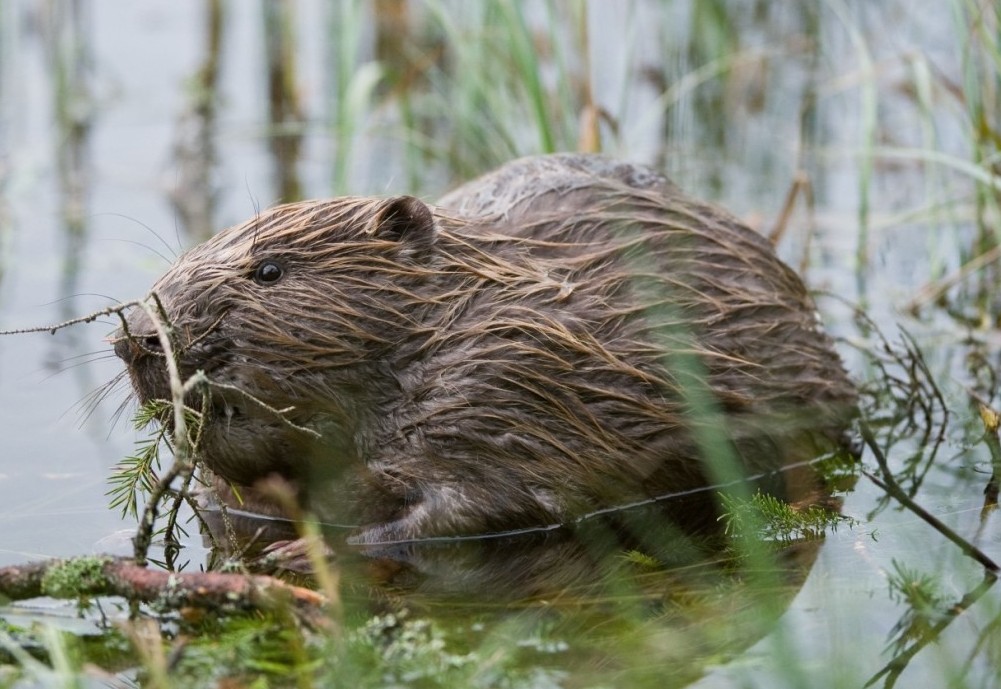
In 2013, Ladock flooded twice and in 2014, it almost flooded again. June 2014 came with confirmation of the site being a good release area for the beavers, and a year later in June 2015, Exeter University (a partner of the project) agreed to execute hydrology monitoring for the area. This meant they looked at water input and output from the area over time. In June 2017, the beavers, a 2-year old male and a 3-year old female, were released. Within 2 days they had begun to create Dams.
32 weeks in, they have built 4 dams and a lodge in which they sleep. The pond has tripled its original volume and there are also 2 new ponds. They are also creating many shallow water pools and converting some of the land into wetland. A stream channel leaving the pond has also been split into two. The Hydrology reports from Exeter University show that when a large amount of water enters the system, it leaves the system much slower than it did before the beavers were introduced; this reduces the flood risk.
There are short-term and long-term prospects for this project. Some short-term prospects are; the dam and lodge building will progress and continue to show good results; wildlife abundance and diversity will continue to increase. Already amphibian spawning numbers have increased and there are some new species entering the habitat.
The main long-term goal is to release the beavers with the hope that eventually they become part of the Cornish countryside and are just a natural part of the nature in Cornwall. This would involve adoption as a native species. Scotland has done this but due to certain laws England cannot so hopefully the beavers in Scotland manage to work their way into, and across, England.
If beavers become naturalised across the UK, stream ecological health may increase and flood events may decrease.
For more information on this ‘gateway re-introduction’ visit the Cornwall Wildlife Trust website.
 Site Title